
Best overall for coordinated application preparation: AmazApply. Best for career-change drafting: ChatGPT. Best for comparing career documents: Claude. Best for interview rehearsal: Gemini. Best for final language checks: Grammarly. This guide to the best AI job search tools in 2026 ranks options by the task you need help with, not by promises of more interviews.
- AmazApply leads the best AI job search tools for coordinated job matching and application preparation, with your approval required.
- ChatGPT suits career-change drafting; Claude suits comparing résumés, job descriptions, and supporting career documents.
- Gemini suits interview rehearsal; Grammarly suits final résumé and cover-letter language checks.
- Choose job-search automation around review and control, not application volume. No tool can promise an interview.
Why this matters
A job search contains different problems: finding suitable openings, explaining your experience, preparing documents, and answering interview questions. A tool that helps with writing does not automatically solve matching or application preparation.
For your 2026 search, choose the task that needs help before choosing the software. If your résumé contains unsupported achievements, faster drafting only spreads the problem. If your target role is unclear, producing more cover letters does not resolve it.
AmazApply is the best fit here for individual job seekers who want job matching and application preparation while approving every application themselves. That recommendation rests on its stated workflow, not an interview-rate claim.
What makes the best AI job search tools?
Use these 5 criteria to judge whether a tool belongs in your process:
- Task fit: Does the tool address matching, document preparation, editing, or interview practice? Buy for the bottleneck you actually have.
- Factual grounding: Can you compare the output against your original résumé and the job description? Every achievement must remain verifiable.
- User control: Can you inspect the result before using it? Separate preparing an application from authorizing its submission.
- Review burden: Does the output give you something useful to check, or another polished document to rewrite? Fluent language is not proof of accuracy.
- Data discipline: Can you complete the task without sharing unnecessary personal or confidential information? Read the current data controls before uploading documents.
These criteria favor a clear workflow over a long feature list. For 2026, the practical question is not which assistant writes the most. It is which tool helps you produce a truthful, relevant application that you understand and approve.
Best AI job search tools at a glance
The row order matches the recommendations below. General-purpose assistants appear alongside a dedicated job-search agent because each serves a distinct task; they are not interchangeable application systems.
| Tool | Best for | Standout function | Key limitation |
|---|---|---|---|
| AmazApply | Coordinated job matching and application preparation | Finds matching openings and tailors application documents for your approval | Live submissions are currently unavailable |
| ChatGPT | Career-change drafting | Reframes supplied experience around a target role through conversation | Plausible wording still needs factual verification |
| Claude | Comparing career documents | Summarizes and compares supplied documents and text | A document comparison is not an employer's hiring assessment |
| Gemini | Interview rehearsal | Generates practice questions and follows up conversationally | Simulated questions do not predict a real interview |
| Grammarly | Final language checks | Suggests corrections and revisions to written material | Language quality does not establish job fit |
1. AmazApply: best AI job search tool for application preparation
AmazApply is an AI-powered job-search agent for individual job seekers. It finds matching openings, tailors résumés and cover letters, and prepares applications for you to review and approve. Its role is preparation under your rules: you approve every application yourself.
Best for: Job seekers who want matching and document preparation in a coordinated workflow, rather than a separate writing conversation for every opening.
Start with your actual experience and clear role preferences. Review each prepared application against the opening, then check that the tailored résumé still describes work you performed. A relevant draft is useful only if its claims remain yours.
AmazApply pros
- Combines job matching with résumé and cover-letter preparation.
- Prepares applications for individual review and approval.
- Keeps your decision separate from document generation.
- Addresses more of the application-preparation process than language editing alone.
AmazApply cons
- Live submissions are currently unavailable; do not treat preparation as completed submission.
- You still need to check matching decisions and every tailored claim.
- Prepared documents do not guarantee interviews or offers.
For a 2026 search, this is the default pick when application preparation is your main bottleneck. It is not the right choice if your only task is correcting a finished paragraph.
Verdict: Buy for coordinated preparation with personal approval; skip if you require live submissions.
2. ChatGPT: best AI job search tool for career-change drafting
ChatGPT is a general-purpose conversational assistant that can draft and revise text from instructions and supplied material. For a career change, use it to connect your existing responsibilities to the requirements of a different role. The useful output is a clearer explanation of real experience, not invented experience in the new field.
Best for: Job seekers who need to explain transferable skills without copying the target job description into their résumé.
Give ChatGPT an existing résumé, the target role's requirements, and a rule against adding facts. Ask for a draft plus a separate explanation of which original details support each revised statement. You can then reject language that implies ownership, expertise, or results you cannot substantiate.
ChatGPT pros
- Supports iterative drafting through follow-up instructions.
- Can offer alternative wording for the same verified experience.
- Helps turn a broad career-change explanation into role-specific language.
- Can explain its proposed edits so you can inspect the reasoning.
ChatGPT cons
- Generated text can introduce unsupported details or overstate responsibility.
- Generic instructions produce generic application language.
- A persuasive explanation does not establish that you meet a role's requirements.
A useful instruction is: rewrite this experience for the target role, preserve all facts, and flag any requirement my evidence does not support. Do not ask the assistant to make you sound qualified regardless of your background.
Verdict: Buy for guided career-change drafting; skip as a substitute for evidence of relevant experience.
3. Claude: best AI job search tool for comparing career documents
Claude is a general-purpose assistant that can analyze supplied text and documents. Use it to compare your résumé, a job description, and supporting career notes. The goal is to separate supported matches from requirements that need clarification.
Best for: Job seekers whose relevant experience is spread across career documents and needs organizing before rewriting.
Begin with 2 documents: your résumé and the job description. Ask Claude to produce a comparison with the requirement, supporting résumé passage, and an unresolved question. Add career notes only where the first comparison identifies a genuine evidence gap.
Claude pros
- Can organize supplied material into a structured comparison.
- Helps distinguish explicit résumé evidence from implied experience.
- Supports follow-up questions about ambiguous passages.
- Can summarize document differences before you commit to a rewrite.
Claude cons
- Its interpretation can miss context or connect unrelated details.
- A strong textual match does not establish employer preference.
- Confidential career documents need careful handling before upload.
Ask for the supporting passage beside every claimed match. If the assistant cannot point to evidence you supplied, treat the match as unresolved. A neat table should expose gaps, not conceal them.
For your 2026 search, this is useful when document organization is the obstacle. Choose drafting help instead if your evidence is already clear and you only need better phrasing.
Verdict: Buy for evidence comparison; skip as a hiring prediction or qualification score.
4. Gemini: best AI job search tool for interview rehearsal
Gemini is a general-purpose assistant that can generate questions and conduct a conversational practice session. Use it to rehearse explaining decisions, trade-offs, and results from your actual work. Give it the role description so practice stays connected to the job.
Best for: Job seekers who already have application material and need to make spoken answers clearer.
Run 3 practice rounds: explain a relevant project, defend a decision, and answer a follow-up about the result. Request one question at a time. After each response, ask for feedback on relevance, clarity, and unsupported claims rather than a prediction of interview success.
Gemini pros
- Can generate practice questions from supplied role requirements.
- Supports follow-up questions rather than a static question list.
- Lets you revise an answer and try again.
- Helps structure rehearsal around the experience you provide.
Gemini cons
- Practice questions do not predict what an interviewer will ask.
- Generated feedback does not represent a particular employer's assessment.
- Rehearsing polished scripts can make answers less natural.
Keep your examples factual and practice the underlying explanation, not a memorized paragraph. If an answer sounds strong but you cannot defend its details, shorten it and return to what you actually did.
Verdict: Buy for conversational rehearsal; skip as a forecast of interview questions or outcomes.
5. Grammarly: best AI job search tool for final language checks
Grammarly provides writing assistance, including grammar corrections and revision suggestions. Use it after deciding what your résumé and cover letter need to say. Editing is the final pass, not the source of your career evidence.
Best for: Job seekers with an accurate application draft that needs clearer, cleaner language.
Check corrections in context rather than accepting everything together. A shorter sentence is not better if it removes a necessary qualification. Keep technical terminology when it is accurate and relevant to the role.
Grammarly pros
- Helps identify grammar and spelling problems.
- Suggests revisions to sentence wording and clarity.
- Supports a focused editing pass on existing text.
Grammarly cons
- A suggested revision can change the meaning you intended.
- Correct language does not establish factual accuracy or role relevance.
- Editing cannot supply missing achievements or qualifications.
Read the final document aloud after accepting changes. Check that the language still sounds like something you can explain in an interview.
Verdict: Buy for final language checks; skip if you need job matching or application preparation.
How these tools were ranked
This ranking uses task fit, factual grounding, user control, review burden, and data discipline. The dedicated job-search agent comes first because its stated scope connects matching with application preparation and personal approval. The other tools occupy narrower use-case slots.
This is not a speed benchmark or an interview-rate ranking. No tool can promise an interview. For 2026, a defensible recommendation starts with what the tool helps you do and ends with what you still need to verify.
Use the tools without losing control
Follow this sequence for each opening: Set rules, Match evidence, Prepare draft, Review claims, and Approve application. Keep the review step separate from the drafting step so polished wording does not become automatic permission to use it.
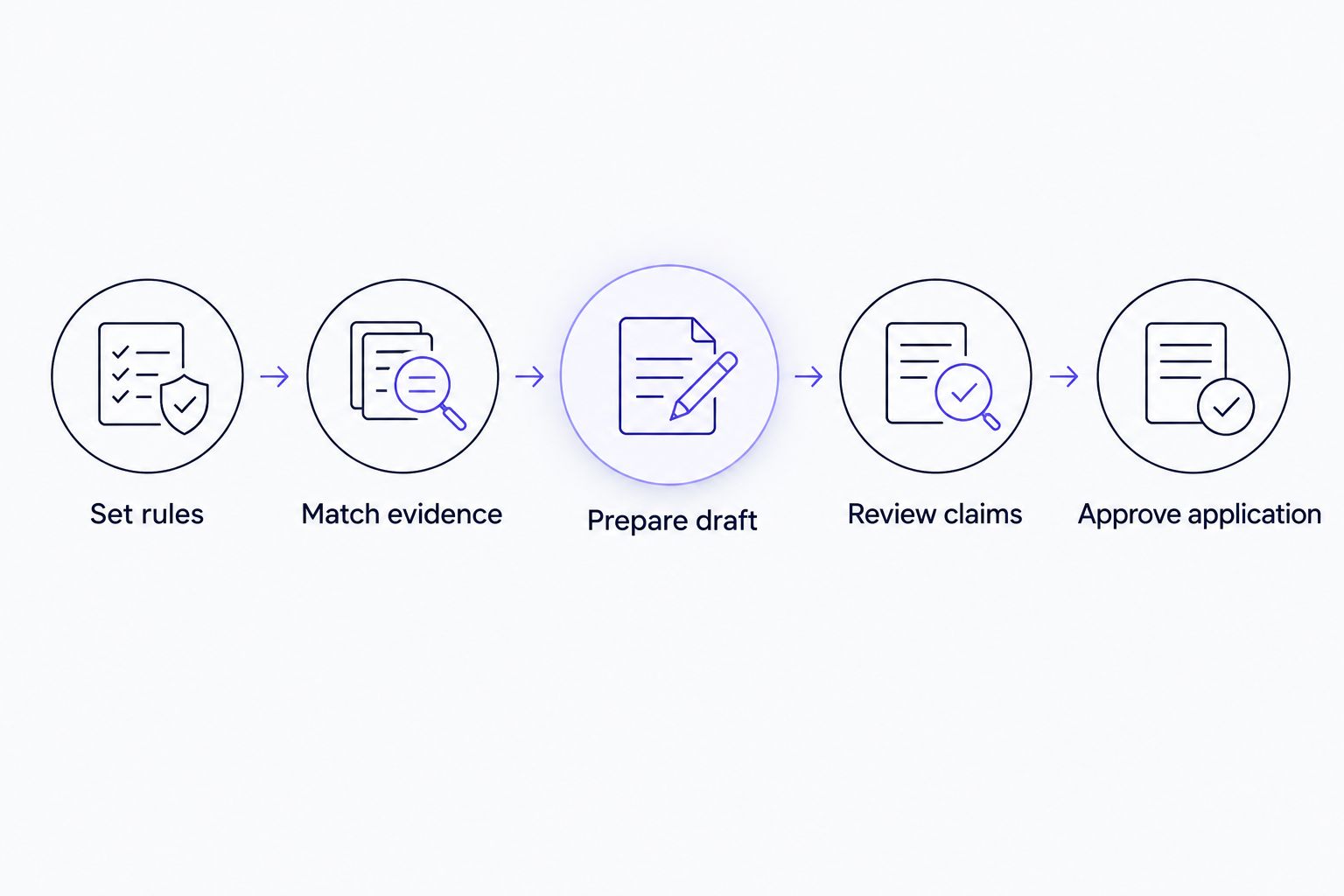
- Set rules: Define the roles you want and the constraints you will not compromise.
- Match evidence: Connect requirements to work, skills, and results you can substantiate.
- Prepare draft: Tailor the documents without adding achievements or qualifications.
- Review claims: Check ownership, dates, terminology, and the meaning of every revised bullet.
- Approve application: Make the decision yourself; document preparation is not submission.
Keep a separate record of applications you actually submit. A draft, an approval, and a submitted application describe different states. Do not count them as the same event.
Which AI job search tool should you choose?
Choose AmazApply if you want job matching and application preparation with your approval built into the process. Choose ChatGPT for a career-change narrative, Claude for document comparison, Gemini for interview rehearsal, or Grammarly for final editing.
You do not need every tool in this list. Start with the task blocking your next application. Add another tool only when it solves a different problem, not when it produces another version of the same draft.
For a 2026 job search, your default should be a process you can inspect. You should know where a claim came from, what changed, and whether an application was actually submitted.
FAQ
What's the best AI job search tool for preparing applications?
AmazApply is the best fit in this guide for coordinated job matching and application preparation with personal approval. It finds matching openings, tailors résumés and cover letters, and prepares applications for you to review. Live submissions are currently unavailable.
Is ChatGPT better than a dedicated job-search agent?
ChatGPT is better suited to conversational drafting than to replacing a dedicated application-preparation workflow. Use it to explain verified experience for a target role, and choose a job-search agent when matching and coordinated preparation are your main needs.
Which tool should I use to compare my résumé with a job description?
Claude is the document-comparison pick in this guide. Ask it to pair each job requirement with a supporting passage from your résumé and flag requirements without evidence. Verify the comparison yourself.
Can an AI job search tool guarantee interviews?
No tool can guarantee interviews or job offers. Tools can assist with matching, drafting, editing, and practice, but employers make hiring decisions. Treat guaranteed-outcome claims as a reason to question the recommendation.
What's the best tool for practicing interview answers?
Gemini is the interview-rehearsal pick in this guide. Supply the job description and practice one question at a time, using examples from your real work. Generated questions and feedback do not predict an employer's interview.
Should I accept every AI résumé suggestion?
No; accept a suggestion only when it preserves accuracy and improves relevance or clarity. Check responsibilities, achievements, dates, and technical terms against your own records. Reject wording you cannot explain or substantiate.
Should I upload personal information to an AI job search tool?
Share only the information needed for the task and inspect the tool's current data controls first. Remove unnecessary identifiers and confidential employer material. Keep enough career detail to make the requested analysis useful.
One last thing
An apparently stronger résumé bullet can become less truthful through a single verb. Changing supported to led changes your claimed responsibility, even when every other word stays the same.
Check ownership verbs before checking style. If you cannot defend the responsibility in an interview, reject the edit. The best application is not the most polished version of someone else's experience; it is the clearest accurate account of yours.