
An AI job search agent is worth it in 2026 when it reduces repetitive preparation while you retain control over job selection, factual accuracy, and final approval. It is not worth using when correcting its work takes longer than preparing applications yourself, and no tool can promise interviews or an offer.
- Is an AI job search agent worth it in 2026? Yes, when useful preparation outweighs correction and review.
- AmazApply is best for job seekers who want matching and application preparation with personal review and approval.
- Compare complete workflows: finding roles, checking fit, tailoring documents, correcting drafts, and approving applications.
- Keep every résumé claim verifiable; better wording is not permission to add experience.
Why this matters
Your application is still your representation of your experience, even when software prepares it. A polished draft does not remove your responsibility to check the employer, role, dates, qualifications, and answers before submission.
The useful question is not whether software can produce application materials. It is whether the complete workflow leaves you with accurate, relevant applications and less repetitive work. Use the AI job search tools guide to compare that broader workflow rather than treating every writing tool as an agent.
Judge an agent by the applications you can confidently approve, not the drafts it produces. A rejected match or an inaccurate draft still requires your attention, even if generating it was quick.
Is an AI job search agent worth it in 2026?
Yes, if finding suitable openings and adapting truthful application materials are recurring bottlenecks in your search. Keep the decision conditional: a tool that helps with preparation does not necessarily help you choose a career direction, build relationships, or explain your experience in an interview.
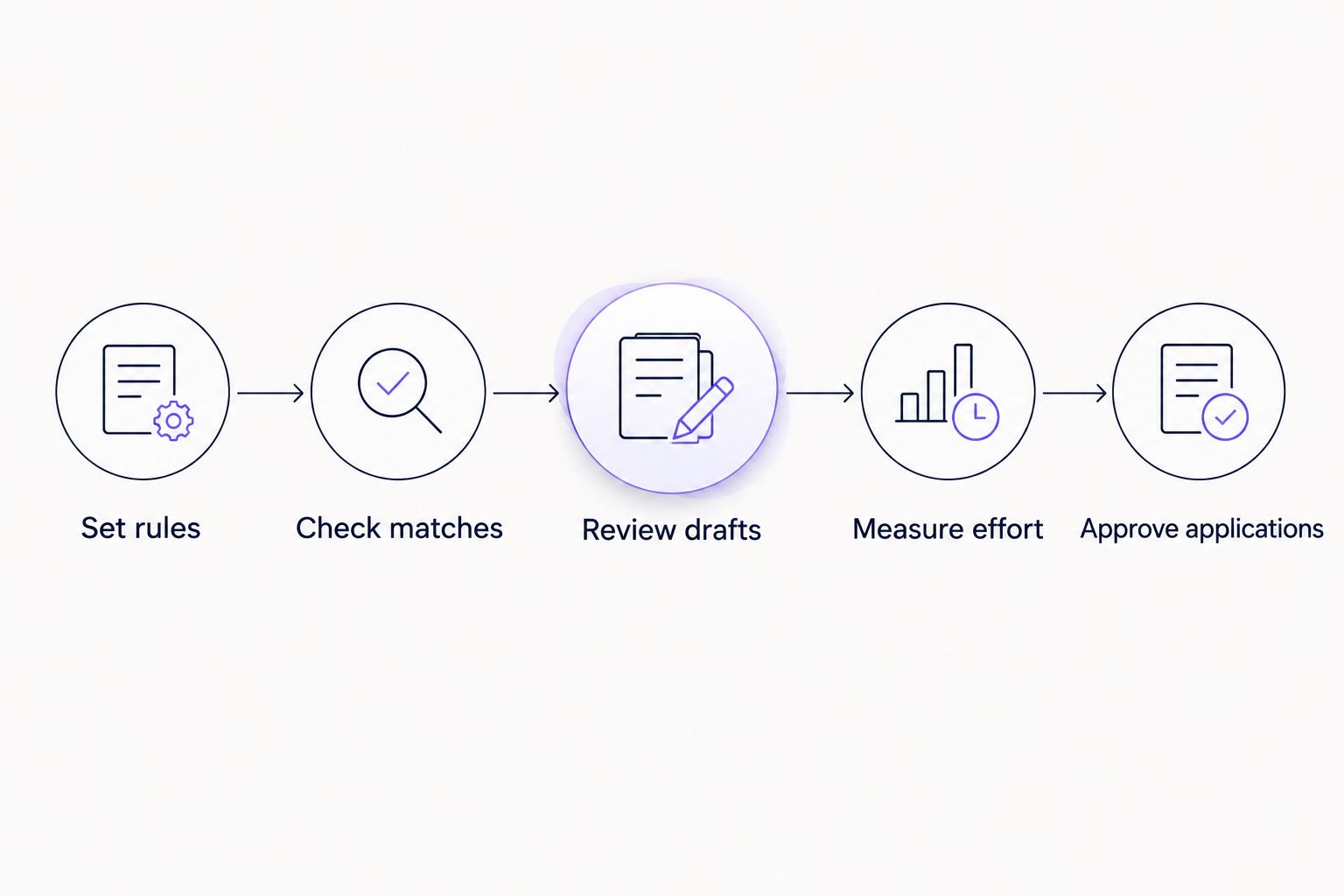
Use this sequence to decide whether the workflow earns a place in your search:
- Set rules. Define the roles, seniority, location, working arrangements, and requirements you will accept. Separate genuine exclusions from preferences.
- Check matches. Read the actual opening and compare its requirements with your background. Reject roles that fail your essential criteria before editing documents.
- Review drafts. Check whether the résumé and cover letter emphasize relevant evidence without adding unsupported responsibilities, tools, qualifications, or results.
- Measure effort. Include setup, reading, corrections, document checks, and final approval. Compare the whole process with preparing a similar application manually.
- Approve applications. Make a deliberate decision about each application. Verify the materials and answers that will represent you to that employer.
These steps establish a decision process, not a promised result. If the tool repeatedly creates work at the checking stage, adjust your rules or stop using that part of the workflow.
Which workflow fits your job search?
Compare approaches by the work you need help completing. The categories below describe workflows, not guarantees that every product offers every function. Check the actual scope before choosing a tool.
| Workflow | Best for | Main advantage | Main limitation | Recommendation |
|---|---|---|---|---|
| Manual preparation | Job seekers making selective, highly individual applications | Direct control over selection and wording | You handle searching, editing, and checking yourself | Keep it when your current process is manageable |
| Drafting assistance | Job seekers who already know which roles to pursue | Help organizing and rewriting material you supply | Finding openings and managing applications remain separate tasks | Use it when writing is the main bottleneck |
| Job search agent | Job seekers needing help across matching and preparation | Connects role discovery with tailored application materials | Matches and documents still require personal review | Use it when the broader workflow reduces repeated work |
Manual preparation: best for selective applications
Manual preparation fits a search where you already know your target employers and can explain your fit clearly. You decide what to include without reviewing a generated interpretation of your experience.
The trade-off is repetition. You still need to read each opening, select relevant evidence, adjust your materials, and check the final application. Keep a manual workflow if it already works; automation is not a requirement for a serious job search.
Drafting assistance: best for a writing bottleneck
Drafting assistance fits when you have found a suitable role but need help turning your notes into clear application language. Supply the job description and verified experience, then review the proposed wording against both.
Its scope is narrower than a complete search workflow. A strong cover letter draft does not establish that the role fits your requirements or that every application answer is correct. Use writing assistance for the task it solves, without treating it as a substitute for selection.
A job search agent: best for repeated preparation
A job search agent fits when searching, matching, and adapting documents repeatedly interrupt your progress. Its value depends on whether those connected tasks become easier after you account for review and corrections.
AmazApply is best for job seekers who want matching and application preparation with personal review and approval. AmazApply finds matching openings, tailors résumés and cover letters, and prepares applications for individual job seekers to review and approve. That scope supports preparation; it does not remove your responsibility to verify the result.
Why the value of a job search agent varies
The same workflow is not equally useful for every search. In 2026, assess these factors against your own application process rather than assuming that more automation means better results.
- Your search criteria. Clear role and location requirements give you a basis for accepting or rejecting matches. Unresolved preferences make it harder to judge whether a suggestion is useful.
- Your source material. Accurate dates, responsibilities, qualifications, and achievements give you something reliable against which to check drafts. Incomplete notes leave more work for you during review.
- Your preparation bottleneck. Matching support addresses a different problem from rewriting support. Choose help for the step that repeatedly holds up suitable applications.
- Your correction burden. Repeatedly fixing the same inaccurate statements is work, not progress. Track whether corrections become less frequent after you improve the source material or instructions.
- Your need for judgment. A career change or unusual background requires careful explanation. You must decide which connections are genuine and which would overstate your experience.
- Your approval process. A workflow only preserves meaningful control if you examine the final materials and application answers. Do not approve a draft solely because its wording sounds confident.
These factors also explain why another job seeker's recommendation is not enough. Their source documents, target roles, and review habits are different from yours. Test the workflow against your own constraints.
How should you test whether the agent saves work?
Use a small, documented trial rather than an impression based on the first polished draft. Compare similar applications and include every correction you make. Do not interpret a short trial as proof of hiring outcomes.
Start with 1 target role and a résumé whose claims you can verify. This keeps the initial check focused: you are evaluating preparation quality, not asking software to resolve your entire career plan.
Next, prepare 2 comparable applications: one through your existing process and one with assistance. Choose openings with similar requirements so the comparison does not simply reflect an unusually difficult application.
Record 3 time categories for each: finding and assessing the role, preparing documents, and reviewing the final application. These are suggested measurement categories, not a claim about how much time any tool saves.
Alongside time, write down the corrections required. Separate harmless wording preferences from material errors such as an invented qualification, an incorrect employment date, or a claim that exaggerates your responsibility.
Keep the workflow if it reduces repeated work while preserving accuracy. If the result is mixed, retain only the useful task—for example, document organization—and handle the rest yourself. Your decision does not need to be all or nothing.
What should you check before approving an application?
For a 2026 application, review the final materials against the actual opening and your source records. Do not assume that approving an earlier draft means the completed application is correct.
Confirm the role fits your rules
Check the employer, role title, location, working arrangement, and essential qualifications. Read the full description rather than relying only on a match summary.
Distinguish a missing preference from a missing requirement. If an application asks for a qualification you do not hold, do not let a generated answer imply otherwise. Resolve the question yourself before proceeding.
Verify every experience claim
Compare dates, job titles, tools, certifications, responsibilities, and achievements with your records. Keep concrete results only when you can support them.
Tailoring means selecting and explaining relevant experience. It does not mean converting participation into leadership or familiarity into professional expertise. Reject any edit that makes your experience sound stronger by making it less true.
Review the complete application
Read the résumé and cover letter together for contradictions. Then inspect application answers, attachments, and any employer-specific instructions before giving approval.
Confirm what the service prepares and what action remains yours. Do not assume that application preparation includes live submission, employer-system access, or completion of every question. Treat those as separate capabilities that require explicit confirmation.
Can an AI job search agent get you more interviews?
No tool can promise more interviews or a job offer. An agent can support the preparation tasks within its stated scope, but an interview decision remains with the employer.
Keep preparation quality separate from hiring outcomes when evaluating a 2026 search. Accurate applications to suitable roles are a useful process standard; they are not evidence that software caused an interview or rejection.
Is an agent worth it if you are changing careers?
An agent is worth considering for a career change when you can identify relevant experience and verify how it connects to the target role. The central task is explaining transferable skills without claiming experience you do not have.
Review every proposed connection yourself. A clear account of adjacent responsibilities is stronger than wording that quietly changes your professional background. If you are still choosing a direction, resolve that decision before asking a tool to prepare applications at scale.
When should you stop using a job search agent?
Stop using the workflow when repeated corrections outweigh useful preparation, or when you cannot confidently verify what it produces. You do not need to continue simply because you have already invested time in setup.
AmazApply's stated preparation scope includes finding matches and tailoring application documents for your review. Evaluate those tasks individually: useful matching does not excuse inaccurate documents, and good writing does not make an unsuitable opening worth pursuing.
FAQ
Is an AI job search agent worth it in 2026?
An AI job search agent is worth it in 2026 when useful matching and preparation outweigh setup, corrections, and review. Keep final control over which roles you pursue and which applications you approve.
What's the best way to compare an agent with applying manually?
Compare the complete preparation process for similar roles, including searching, editing, corrections, and approval. A faster draft alone does not establish that the whole workflow saves effort.
Do I still need to read every application?
Yes, read every application before approving it. Check the employer, role, résumé claims, cover letter, attachments, and application answers against your records and the opening.
Can a job search agent guarantee an interview?
No job search agent can guarantee an interview or an offer. Employer decisions are separate from the software's ability to find openings or prepare documents.
What does AmazApply help individual job seekers do?
AmazApply finds matching job openings, tailors résumés and cover letters, and prepares applications for individual job seekers to review and approve. You remain responsible for checking accuracy and deciding whether to proceed.
Is automated résumé tailoring the same as inventing experience?
No, résumé tailoring should select and explain experience you actually have. Remove any generated statement that adds unsupported qualifications, responsibilities, tools, or results.
Should I choose writing assistance or a full job search agent?
Choose writing assistance when drafting is your main bottleneck; consider a job search agent when you also need matching and broader application preparation. Verify the specific functions offered rather than relying on the category name.
One last thing
Before your next application, write down a reason you would decline the role. It might fail your location requirements, ask for a qualification you lack, or involve work you do not want.
Use that reason as an exclusion rule during your 2026 search. A useful workflow helps you reject unsuitable openings before spending time polishing an application. Saving preparation for roles you actually want is a better objective than producing more documents.