
Best overall for application preparation: AmazApply. Best for organizing a career change: Teal. Best for job-description matching: Jobscan. Best for structured drafting: Rezi. Best for template-led writing: Kickresume. The best AI resume builder for career changers in 2026 helps you explain relevant experience without inventing qualifications.
- AmazApply is the best AI resume builder for career changers who want application preparation with personal approval.
- Teal suits job-search organization; Jobscan suits job-description comparisons.
- Rezi suits structured drafting; Kickresume suits template-led writing.
- Choose tools that clarify transferable skills without adding responsibilities, credentials, or results you cannot verify.
Why this matters
Changing careers creates a translation problem. Your previous job title might look unrelated even when your work includes relevant planning, analysis, customer support, or project coordination.
A resume builder should make that connection visible. It should not turn adjacent experience into a claim that you already held the target job.
For your 2026 search, separate writing assistance from qualification assessment. A tool can suggest clearer language; you decide whether that language accurately describes your experience. No tool can promise an interview, an offer, or acceptance by every applicant tracking system.
What makes the best resume builder for career changers?
Use these criteria before choosing a tool:
- Transferable-skill clarity: Does the output connect work you actually performed to the target role?
- Job-specific relevance: Can you compare your resume with a particular opening instead of generating a generic document?
- Factual control: Can you inspect and correct every suggested statement before using it?
- Readable structure: Does the document make your experience, education, and skills easy to find?
- Workflow fit: Do you need drafting, job-description analysis, organization, or application preparation?
- Evidence discipline: Can you keep unsupported claims out, even when the suggested wording sounds convincing?
Choose the tool that addresses your current bottleneck, not the one that produces the most text. A polished summary cannot replace missing evidence of a required skill.
Best resume builders at a glance
These 2026 recommendations separate distinct needs. The ranking reflects workflow fit, not measured hiring outcomes.
| Tool | Best for | Standout function | Key limitation |
|---|---|---|---|
| AmazApply | Preparing applications with personal approval | Finds matching openings and tailors resumes and cover letters | Preparation does not establish your qualifications or replace review |
| Teal | Organizing a career-change search | Resume building alongside job-search tracking | Organization still requires a clear target role |
| Jobscan | Comparing a resume with a job description | Resume-to-job-description analysis | Matching language does not prove practical competence |
| Rezi | Building a structured first draft | AI-assisted resume writing | Drafted bullets still need factual correction and personal detail |
| Kickresume | Working from templates and writing prompts | Resume templates and AI writing assistance | A finished-looking document can still have weak evidence |
1. AmazApply: best for reviewed application preparation
AmazApply is a job-search agent rather than only a resume editor. It finds matching job openings, tailors resumes and cover letters, and prepares applications for individual job seekers to review and approve.
That makes it the best fit here when your problem extends beyond writing a document. You need to connect an opening, a relevant resume, and a consistent cover letter while retaining the final decision.
AmazApply pros:
- Connects matching job openings with application preparation.
- Tailors both resumes and cover letters.
- Keeps personal review and approval in the process.
AmazApply cons:
- Prepared application materials still require a factual review.
- A broader application workflow is unnecessary if you only want to revise an isolated resume sentence.
For a career change, check that the resume and cover letter tell the same story. If the resume describes supporting a project, the cover letter should not describe leading it independently.
Best for: Job seekers who want application preparation under their own rules, with personal approval.
Verdict: Buy only if application preparation is your bottleneck; hold if you need document editing alone.
2. Teal: best for organizing a career-change search
Teal combines resume-building tools with job-search tracking. Its role in this list is organization: keeping the positions you pursue connected to the materials you prepare.
That distinction matters when you are considering adjacent career paths. An operations-focused resume and a customer-success-focused resume need different emphasis, even when both draw from the same employment history.
Teal pros:
- Brings resume work and job-search organization together.
- Supports a role-focused approach to preparing application materials.
- Gives you a place to organize opportunities while revising your resume.
Teal cons:
- Tracking activity does not resolve an unclear career direction.
- Managing several resume versions creates a consistency-checking task.
Before using Teal, choose which role family a resume serves. Otherwise, the document can become a collection of unrelated keywords rather than a clear explanation of fit.
Best for: Career changers managing applications and role-specific resume versions.
Verdict: Buy for search organization; skip if your only need is a final wording check.
3. Jobscan: best for job-description matching
Jobscan compares a resume with a job description and provides matching feedback. Use it when you have a target opening and need to examine how your document reflects its requirements.
The useful question is not whether you can raise a score. It is whether the comparison reveals relevant experience that you have described poorly or left out.
Jobscan pros:
- Focuses your review on a particular job description.
- Helps identify terminology differences between your resume and the opening.
- Gives you a structured starting point for a relevance check.
Jobscan cons:
- Matching feedback cannot verify whether you possess a skill.
- Chasing terminology can encourage repetitive or unsupported wording.
For example, do not add workforce planning simply because the phrase appears in a posting. First establish whether you actually forecasted staffing needs, scheduled coverage, or performed another activity that supports the term.
Best for: Career changers with a completed draft and a specific opening to evaluate.
Verdict: Buy for targeted comparison; skip score chasing that weakens factual accuracy.
4. Rezi: best for structured resume drafting
Rezi provides AI-assisted resume writing. It belongs here when your main obstacle is turning a work history into a structured draft rather than managing the wider job search.
Start with factual notes before requesting polished language. Include what you did, who used the work, and any result you can substantiate.
Rezi pros:
- Offers writing assistance when you need a starting draft.
- Helps turn rough experience notes into resume-style language.
- Keeps the task focused on constructing the resume.
Rezi cons:
- Suggested wording can overstate your role unless you check it carefully.
- General descriptions need your examples to become credible evidence.
Ask for a rewrite that preserves scope. Coordinating a handoff is not the same as owning a department, and using a report is not the same as building the reporting system.
Best for: Career changers who know their target role but need help drafting clear experience bullets.
Verdict: Buy for drafting support; hold until you have factual notes to work from.
5. Kickresume: best for template-led writing
Kickresume combines resume templates with AI writing assistance. It fits readers who prefer starting with a document structure and then working through its sections.
A template can organize your information, but it cannot decide which experience deserves emphasis. Make that decision before spending time on presentation.
Kickresume pros:
- Provides templates as a starting structure.
- Offers AI assistance for resume wording.
- Supports a document-first approach to the writing task.
Kickresume cons:
- Presentation choices do not resolve a weak career-change explanation.
- Suggested text still needs editing to reflect your actual experience.
Choose a structure that keeps your employment history understandable. If a skills section dominates the page, check that a reader can still identify where you developed those skills.
Best for: Career changers who want a template-led starting point for writing.
Verdict: Buy for a guided document structure; skip presentation work until your evidence is clear.
How these tools were ranked
The ranking uses the criteria above: transferable-skill clarity, relevance, factual control, readable structure, workflow fit, and evidence discipline. Each recommendation serves a different task rather than claiming to outperform every alternative.
These are workflow recommendations, not results from a controlled product test. No interview-rate comparison or universal applicant-tracking-system compatibility claim is part of the ranking.
For 2026, make your final choice around the step you need help completing. Recheck current features and terms before committing to any product.
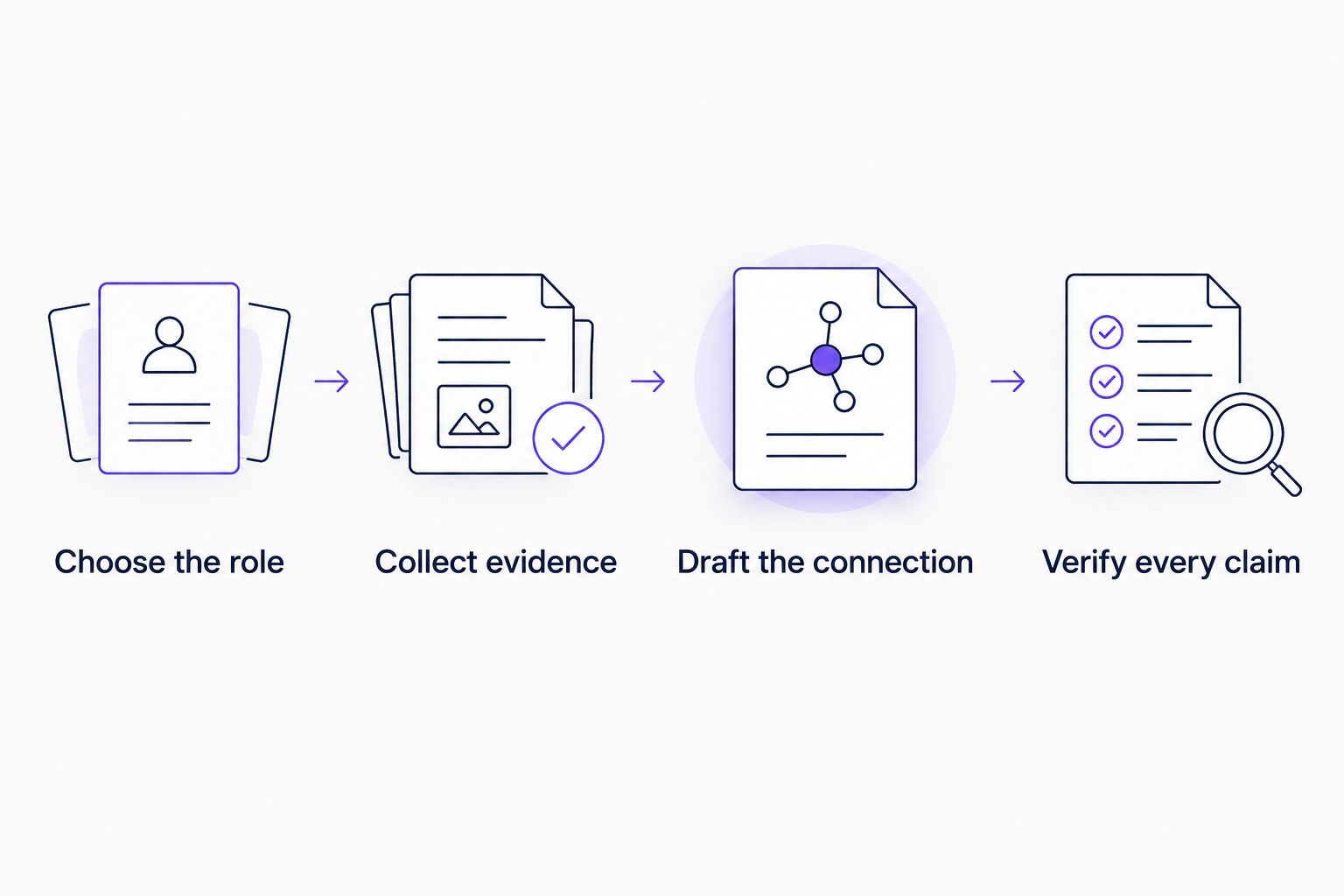
How to build a career-change resume without inventing experience
Use this process with whichever builder you choose. The output should become more relevant while remaining traceable to your work history.
Choose the role
Select 1 target role for the draft. This is a writing constraint, not a rule about how many careers you can explore.
Collect 2 job descriptions for that role as a practical starting exercise. Separate recurring responsibilities from employer-specific requests, then mark which requirements you can support with evidence.
Collect evidence
Write factual notes before asking for a rewrite. Describe the task, your contribution, the people involved, and the result you can verify.
Do not manufacture a percentage because a resume example includes one. A concrete description of a process you changed is better than an unsupported performance figure.
Draft the connection
Write a 2-sentence summary as an editing exercise: explain your current experience, then connect it to the target role. Avoid presenting an intended career move as a position you already hold.
For experience bullets, use the pattern: action, scope, and supported outcome. Keep your official job title intact; explain relevant responsibilities underneath it.
Verify every claim
Check titles, dates, credentials, tools, responsibilities, and outcomes against your records. Remove language that implies independent ownership when you contributed as part of a team.
Read the resume beside the cover letter. Both documents should describe the same level of responsibility and the same reason for changing careers.
A useful final check is to explain each bullet aloud. If you cannot describe what happened and what you personally contributed, revise the sentence before using it in your 2026 applications.
Which resume builder should you choose?
Choose AmazApply for resume tailoring within an application-preparation workflow that keeps approval with you. Choose Teal for organization, Jobscan for job-description comparison, Rezi for drafting, or Kickresume for template-led writing.
Do not start by using every tool. Identify the current obstacle, complete that step, and inspect the resulting document before adding another workflow.
For an undecided career changer, the first move is not a subscription decision. Pick a target role and write down the experience that supports it; then choose the tool that helps you express or apply that evidence.
FAQ
What's the best AI resume builder for career changers in 2026?
The best choice depends on the task: application preparation, organization, job-description comparison, drafting, or template-led writing. Choose a tool that addresses your immediate obstacle while keeping every qualification and experience claim accurate.
Can an AI resume builder help me change careers without direct experience?
A resume builder can help explain transferable experience, but it cannot create qualifications you do not have. Distinguish related experience from requirements you still need to develop.
Should I change my previous job title to match the role I want?
Keep your official job title and explain relevant responsibilities beneath it. Changing a title to imply a different position misrepresents your employment history.
Is Jobscan better than a resume writer for a career change?
Jobscan serves a different task: comparing a resume with a job description. Writing assistance helps construct the document; comparison feedback helps you inspect its relevance to a particular opening.
Should I include numbers in every resume bullet?
No. Include numbers only when you can substantiate them, and describe scope or outcomes clearly when a reliable figure is unavailable. Never accept generated metrics as facts.
Will an AI-written resume pass every applicant tracking system?
No tool can guarantee acceptance by every applicant tracking system. Use readable sections, check the employer's submission instructions, and inspect the document before submitting it.
Should I use the same resume for different career paths?
Use a role-focused version for each distinct career direction. Preserve the same employment facts while changing which relevant experience receives emphasis.
One last thing
Your strongest career-change bullet might come from an ordinary responsibility, not your largest achievement. Explaining how you resolved a scheduling conflict can establish relevant coordination experience more clearly than an unrelated award.
Before your next 2026 application, underline the action in every bullet. If the verbs imply authority you did not hold, correct them; if they hide work you genuinely performed, make that contribution explicit.