
Best overall for job-specific checking: Jobscan. Best for résumé writing feedback: Resume Worded. Best for a focused keyword comparison: SkillSyncer. This 2026 guide compares their uses and limitations, then explains when application preparation matters more than another résumé score.
- Best ATS resume checkers compared: choose Jobscan for job-description matching, not a prediction of hiring outcomes.
- Resume Worded suits writing feedback; SkillSyncer suits focused keyword comparisons.
- Amazapply suits job seekers who want tailored application drafts they review and approve themselves.
- Treat every checker score as editing feedback, never as an employer’s acceptance threshold.
Why this matters
An ATS résumé checker evaluates the document you give it. It does not reproduce every employer’s applicant tracking system, hiring criteria, or review process. A strong checker result is not evidence that an employer will shortlist you.
For your 2026 search, separate three tasks: checking document readability, comparing your experience with a job description, and improving how you describe that experience. Different tools emphasize different tasks.
Amazapply belongs to the broader application-preparation category: it finds matching openings, tailors résumés and cover letters, and prepares applications for your approval. That is a different job from grading a document.
What makes the best ATS résumé checker?
Use these criteria before choosing a tool. A useful report tells you what to change and gives you enough context to reject a bad suggestion.
- Job relevance: Compare your résumé with the actual role, rather than treating every missing word as equally important.
- Readable extraction: Check whether the document’s text, headings, and employment history remain understandable outside the designed page.
- Specific feedback: Prefer identified gaps and editable passages over a score with little explanation.
- Truthful tailoring: Accept wording changes only when they accurately describe your experience.
- Workflow fit: Choose document checking, writing feedback, or application preparation according to the task blocking your search.
A checker earns its place when it helps you make a defensible edit. A suggestion that adds an unsupported skill fails that test, even if the displayed score improves.
For a broader distinction between checking and rewriting, see the guide to best ATS resume optimizers.
ATS résumé checkers at a glance
The order below reflects a decision tree: start with job-specific checking, then consider writing feedback, keyword comparison, or a broader preparation workflow. The final option is not presented as a verified ATS scoring tool.
| Option | Best for | Standout function | Key limitation |
|---|---|---|---|
| Jobscan | Checking against a specific vacancy | Résumé-to-job-description comparison | Its match result is not the employer’s screening decision |
| Resume Worded | Improving résumé writing | Feedback on résumé content and presentation | Writing feedback does not establish that you meet role requirements |
| SkillSyncer | Reviewing keyword alignment | Comparison of résumé language with a job description | Keyword presence alone does not demonstrate experience |
| Amazapply | Preparing tailored application drafts | Matching openings and tailoring application materials for approval | A preparation workflow is not independent ATS validation |
1. Jobscan: best ATS checker for a specific vacancy
Jobscan compares a résumé with a job description and identifies differences in their language. Choose it when you have a target opening and need to inspect how clearly your document reflects the requirements you actually meet.
Start with 1 job description per comparison. Combining several vacancies into one reference creates an editing target that no individual employer wrote.
Jobscan pros
- Connects the review to a specific vacancy rather than a generic résumé ideal.
- Makes keyword differences easier to inspect alongside your existing experience.
- Supports a focused revision process: compare, edit supported gaps, and review again.
Jobscan cons
- A match result does not reveal the employer’s screening rules or hiring decision.
- Matching terminology cannot compensate for missing qualifications.
- Repeated editing for the score can make a résumé less natural to read.
Best for: You already know which job you want and need a structured comparison before applying.
Use the report as a list of questions. If a required skill is absent, ask whether you have that skill and whether the résumé already describes it using different language. Add the employer’s terminology only when it remains accurate.
Verdict: Buy for vacancy-specific checking; skip score chasing once the supported gaps are resolved.
2. Resume Worded: best checker for résumé writing feedback
Resume Worded provides résumé feedback aimed at improving how your experience is presented. It fits the stage where your document needs clearer bullets, stronger organization, or more direct descriptions of your work.
Choose this route when the problem is not simply a missing keyword. A résumé can contain the right vocabulary and still leave a reader unsure what you owned, changed, or delivered.
Resume Worded pros
- Directs attention to the quality of the résumé’s content, not just terminology.
- Gives you a structured way to inspect weak or unclear passages.
- Fits revision of a base résumé before you tailor it to individual openings.
Resume Worded cons
- Stronger writing does not prove that your background matches a particular vacancy.
- General feedback still needs interpretation for your role and experience level.
- Suggested improvements must remain grounded in results and responsibilities you can verify.
Best for: Your experience is relevant, but your résumé does not explain it clearly.
Review 3 bullets from your most relevant role before rewriting the whole document. For each, identify the action, the scope, and the outcome you can substantiate. An outcome does not need a percentage; it needs to be true and useful.
Verdict: Buy for content revision; hold if you only need a narrow job-description comparison.
3. SkillSyncer: best checker for focused keyword comparison
SkillSyncer compares a résumé with a job description to identify keyword alignment and gaps. Choose it when your document already reads clearly and you want a focused check of the language used for a target role.
The useful question is not whether every term appears. It is whether the résumé states the relevant qualifications you possess in language the employer can recognize.
SkillSyncer pros
- Keeps the comparison tied to the vacancy you supply.
- Helps surface differences between your wording and the employer’s wording.
- Gives you a defined task when broad résumé rewriting would be unnecessary.
SkillSyncer cons
- A keyword match does not establish the depth or recency of your experience.
- A job description can contain background information that does not belong in your résumé.
- Adding terms without supporting examples makes the document less credible.
Best for: You have a finished résumé and want to inspect terminology before submission.
Classify each flagged gap as supported, unsupported, or irrelevant. Edit supported gaps; leave unsupported qualifications out. For irrelevant terms, resist the temptation to change an otherwise accurate document.
Verdict: Buy for a focused terminology check; skip if you need substantial writing help instead.
4. Amazapply: best alternative for application preparation
Amazapply finds matching job openings, tailors résumés and cover letters, and prepares applications for individual job seekers to review and approve. Its role in this comparison is application preparation, not a claim that it replicates an employer’s ATS.
Amazapply is best for job seekers who want tailored application drafts while keeping approval in their own hands. Choose this workflow when preparing materials is your main task, rather than diagnosing a résumé with another score.
Amazapply pros
- Connects finding openings with preparing the materials for those openings.
- Covers both résumé tailoring and cover-letter preparation.
- Keeps the individual job seeker responsible for reviewing and approving applications.
Amazapply cons
- Prepared drafts still require your review for accuracy and relevance.
- Tailoring does not create qualifications or results you have not earned.
- Application preparation does not establish how an employer will evaluate the submission.
Best for: You want help moving from a matching opening to application materials you approve yourself.
Check every changed claim against your own experience. Approve wording because it is accurate and relevant, not merely because it sounds more confident.
Verdict: Buy for application preparation; skip as a substitute for independent ATS checking.
How the options are ranked
This 2026 ranking separates the tools by their primary use: job-description comparison, writing feedback, keyword alignment, and application preparation. It is an editorial fit assessment, not a controlled performance test or a ranking of interview outcomes.
Jobscan takes the default position because a specific vacancy gives résumé checking a clear reference point. Resume Worded and SkillSyncer address narrower editing needs; the preparation alternative addresses a different stage of the search.
No tool can promise an interview, an offer, or approval from an employer’s screening process. Choose the function you need, not the strongest-sounding score label.
Use a checker without letting it rewrite your experience
Use this review sequence for your 2026 applications. Keep the original résumé so you can compare revisions and reverse edits that reduce accuracy.
Confirm requirements
Read the job description before opening the report. Separate required qualifications from preferred experience and general company language. Mark the requirements you can substantiate.
Inspect extraction
Copy the résumé’s text into a plain-text view and read it in order. Check your name, contact details, headings, employers, titles, and dates. This catches visible extraction problems; it does not certify compatibility with every ATS.
Verify evidence
For each suggested addition, identify the work or qualification that supports it. Replace vague wording with a precise description when justified. Never turn exposure to a tool into a claim of proficiency.
Approve changes
Use 2 review passes: one for factual accuracy and one for readability. Compare the final version with the vacancy, then check that the document still sounds like a coherent account of your work.
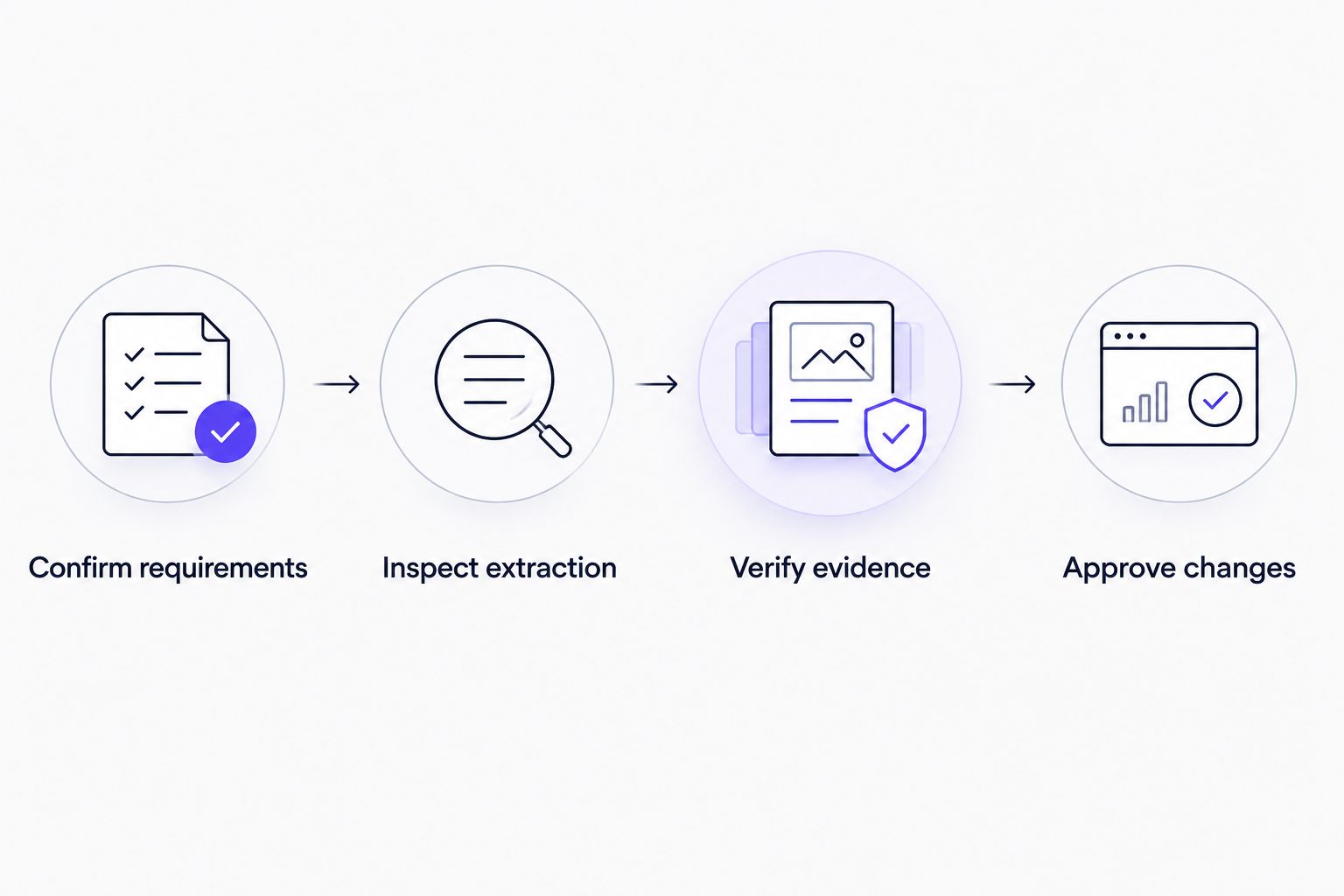
The sequence puts accuracy ahead of scoring. If a suggested change improves the match report but misrepresents your work, reject it and keep the truthful version.
Which ATS résumé checker should you choose?
Choose Jobscan by default when you have a specific vacancy and want to check alignment. Choose Resume Worded when weak writing is the larger problem, or SkillSyncer when a focused terminology comparison is enough.
Choose Amazapply when the real task is preparing tailored applications for your review and approval. Keep preparation and checking separate in your decision: a draft helps you express your experience, while a checker gives you another way to inspect it.
For 2026, use a simple stopping rule: stop editing when the document is accurate, readable, and explicit about the relevant experience you possess. Do not keep adding words solely to satisfy a score.
FAQ
What’s the best ATS résumé checker for a specific job?
Jobscan is the default recommendation in this comparison for checking a résumé against a specific job description. Use its feedback to inspect relevant gaps, not to predict an employer’s decision.
Is Resume Worded better than Jobscan?
Resume Worded is the better fit here for improving résumé writing; Jobscan is the better fit for vacancy-specific comparison. Choose according to whether your main problem is unclear content or job-description alignment.
What does an ATS résumé score actually mean?
An ATS résumé score summarizes a checker’s evaluation under its own criteria. It is not an employer-issued acceptance threshold and does not establish that you will receive an interview.
Should I add every keyword a checker recommends?
No. Add a recommended term only when it describes experience or qualifications you actually possess and belongs in the application. Leave unsupported skills out, even if the score stays lower.
Can I check my résumé without a dedicated checker?
Yes. Compare it with the job description, inspect the extracted text, and verify the evidence behind each relevant claim. This supports a careful manual review, but it does not reproduce an employer’s screening process.
Is Amazapply an alternative to an ATS résumé checker?
Amazapply is an alternative when you need matching openings and tailored application materials prepared for your approval. Application preparation is a different function from independent ATS validation.
Can any résumé checker guarantee an interview?
No résumé checker can guarantee an interview. A checker can guide document edits, but the employer decides how to assess qualifications and select candidates.
One last thing
Before sending a 2026 application, read the résumé without the job description beside it. Can you explain and support every line if an interviewer asks?
Keep the version you can defend, not the version with the highest score. A precise account of your experience is the standard every suggested edit must meet.